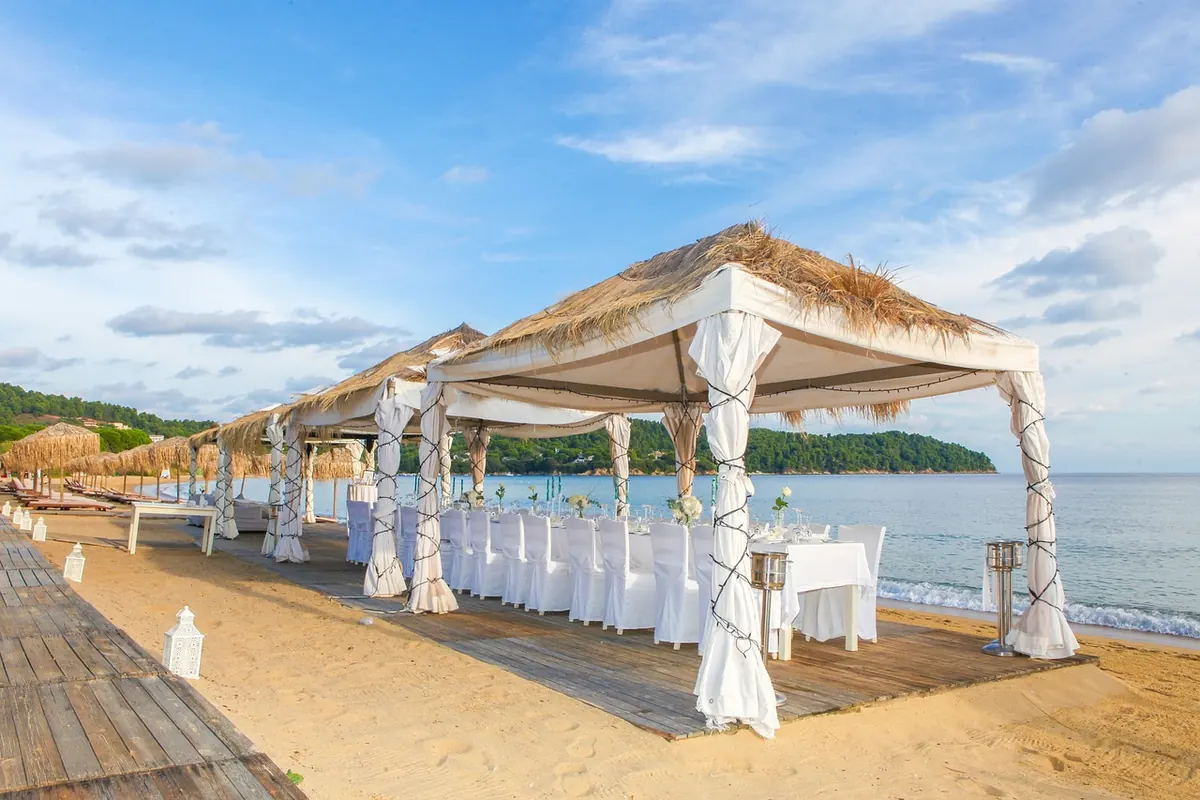
You picture it: forty people you love, three days in a place none of you have been, and nobody asking your mother about the seating chart. Destination weddings can absolutely deliver that. They also involve apostilles, shuttle buses, and one uncomfortable conversation with a cousin about why the resort costs more than her rent. Both things are true. Here is what to settle before you put down a deposit.
The Legal Side Is Unromantic and Non-Negotiable
Every country sets its own rules for who can marry there, and those rules rarely bend for your timeline. Some require you to be resident for a set number of days before applying. Some have a waiting period between application and ceremony. Some will only marry you in a civil ceremony at a registry office, which means your beach ceremony is legally decoration. Others recognize religious ceremonies officiated by registered clergy.
Paperwork is where couples get caught out, because documents that are perfectly valid at home may be rejected abroad without the right stamps and translations.
- A long-form birth certificate, not the short version
- Proof you are free to marry, sometimes called a certificate of no impediment
- Divorce decrees or a late spouse's death certificate, if either applies
- Certified translations of anything not in the local language
- Apostilles or consular legalization, depending on the country
- Passports for both of you, and often for your witnesses
Many couples sidestep the whole maze: they marry quietly at home a few weeks earlier and hold a symbolic ceremony abroad. That keeps the vows in your own language, avoids translation problems, and makes the marriage easier to have recognized back home. Whichever route you choose, confirm the requirements directly with the embassy or consulate of the country where you plan to marry, and get local legal advice before you commit to a date. Ask the same question of your own government when you return.
Travel Logistics Shape Your Guest List More Than You Think
A venue forty minutes from an international airport is a different wedding than one four hours down a winding coastal road. Look at flight routes from the cities your guests actually live in. Two connections and a red-eye will quietly remove people from your list, and that is worth knowing before you fall in love with a venue.
Check the season in a real way. Rainy season, hurricane season, monsoon, extreme heat, and local holidays that triple hotel rates all matter. So does passport validity: many countries require six months beyond your travel dates plus blank pages, and renewals can take weeks or months. Visas and transit visas need checking early too. Tell guests to book flights under the exact name printed on their passport.
Get these answers from the venue in writing
- Setup and curfew times, and any noise limits
- Whether you must use their caterer or can bring vendors in
- What the rain backup actually looks like, and what it costs
- How many people can sleep on site, and who else is nearby
- The deposit schedule and the cancellation terms
Communicate Like a Project Manager, Host Like a Friend
Send save-the-dates ten to twelve months out, earlier if you are marrying in peak season or somewhere people need to save for. Build a wedding website that answers everything: airport, transfers, hotels, dress code, weather, kids, currency, plugs, and how much a drink costs. Set a clear RSVP deadline four to five months before the wedding so you can lock in numbers. Pick one channel for updates, whether that is email or a group chat, and stick to it.
Expect a meaningful number of declines, and do not take it personally. Vacation days, budgets, health, and small children are real constraints. Say thank you and mean it. If you are asking guests to pay for a welcome dinner, an excursion, or a shuttle, say so upfront rather than springing it on them later. And name one person who is not you or your partner to field questions on the wedding weekend.
Where a Destination Budget Differs
The guest count usually drops, which lowers food, drink, and rental costs. Meanwhile, fixed costs rise sharply, because you are now paying to move people and things. Your photographer needs a flight and a room. A band costs more than a DJ with a laptop, and a DJ costs more than a playlist. A tent on a remote beach costs more to deliver than the tent itself.
Costs couples forget
- Travel and lodging for photographers, planners, and musicians
- Permits, licenses, translations, and courier fees
- Shuttle buses and late-night return transport
- Welcome bags, printing, and shipping
- Foreign transaction fees, exchange rates, and international wire charges
- Weather backups: heaters, fans, flooring, umbrellas
- An extra night at the venue for early setup
Build in a contingency you would be genuinely comfortable spending. Ship as little as possible. Rent or buy locally instead, and put one person in charge of every arrival. Ask about local tax, service charges, and tipping customs, because they vary widely and can surprise you on the final invoice. For anything with legal or tax consequences, confirm with a qualified professional rather than a forum thread.
A Sensible Order of Operations
- Twelve to eighteen months out: choose the country, confirm the legal requirements, agree on a total budget, book the venue and date, send save-the-dates.
- Ten to twelve months out: hire a planner who works locally, book the photographer, set up room blocks and your website.
- Eight to ten months out: send invitations, book your own flights, plan a scouting trip if you can.
- Six months out: finalize menu, decor, and transport.
- Four to five months out: close the RSVP list, build the seating chart, reconfirm every vendor.
- Final month: settle final payments, send your timeline to vendors, brief your point person, and pack the paperwork in a carry-on.
Before You Put Down a Deposit
Do three things first. Call the consulate and write down what they tell you. Ask the venue for a full written estimate that includes taxes, service charges, and required vendors. Then talk honestly with five guests you trust about money and time off, and listen to what they say. If those three conversations go smoothly, you have earned the right to book the cliff and the long table and the three days you have been imagining.
Photo: StockSnap / Pixabay